
News
NTU HPC/AI Earns Two Podium Finishes at ISC 2026
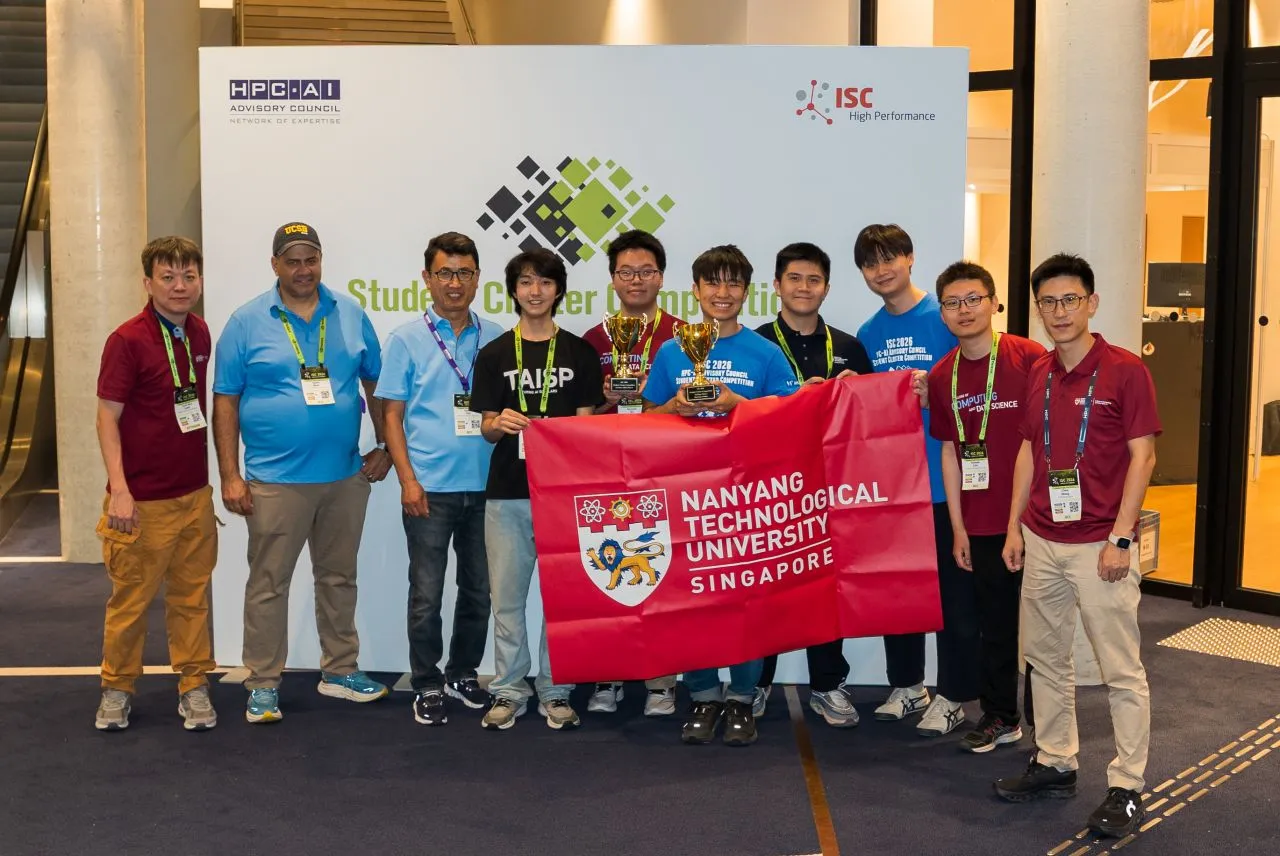
NTU earned first place in the onsite ISC 2026 Student Cluster Competition and placed second in its virtual competition.
NTU HPC/AI Earns Two Podium Finishes at ISC 2026
NTU HPC/AI earned two podium finishes at the ISC 2026 Student Cluster Competition (SCC), placing first in the onsite competition and second in the virtual competition.
The results recognise the team’s performance across two very different high performance computing challenges: one centred on operating a physical cluster in person, and another on extracting performance from remote supercomputing systems.
Two formats, two very different challenges
The ISC Student Cluster Competition gives university teams a practical introduction to high performance computing. In 2026, it was split into virtual and onsite segments, each testing a different side of running HPC workloads.
Virtual competition: using remote supercomputers
For the virtual competition, NTU competitors connected remotely to the ROMEO supercomputer at the University of Reims Champagne-Ardenne in France and the Iris cluster provided through the HPC-AI Advisory Council. From Singapore, the team used these systems to run HPC applications, perform benchmarks, and tackle the competition’s assigned challenges.
The virtual format focuses on getting the most from systems that teams access remotely. Students must understand the available hardware and software environments, submit and manage jobs, interpret performance results, and tune applications without ever physically touching the machines.
Onsite competition: managing the cluster itself
The onsite competition adds a more demanding operational challenge. Teams assemble and operate their own clusters before running micro-benchmarks and HPC applications. In addition to application performance, students must manage the hardware and the system configuration themselves while working under the time pressure of the live event.
That combination of hardware responsibility and performance tuning is what makes the onsite format especially hands-on. The team must make sound decisions across the full system, from bringing the cluster up successfully to ensuring the software and workloads use it effectively.
A result built on technical teamwork
First place onsite and second place virtually reflect the breadth of NTU HPC/AI’s preparation. Across both formats, success depends on understanding hardware, software, data movement, benchmarking, and the workloads running on a cluster.
Congratulations to the team on an outstanding ISC 2026 campaign, and thank you to the organisers, advisors, supporters, and fellow competitors who made the competition possible.
Sources
Written by
